How to Make Salmon Rice Bowl from Leftovers in 15 Minutes
One Thursday night after work, I found myself with leftover grilled salmon and a craving for something quick. I opened the fridge, grabbed a few ingredients, and in just 20 minutes, I had a delicious salmon rice bowl on my hands. It turned out so well that I immediately texted my sister about it! This isn’t a brand-new recipe, but rather a fun twist on classic ingredients that come together in a satisfying way.
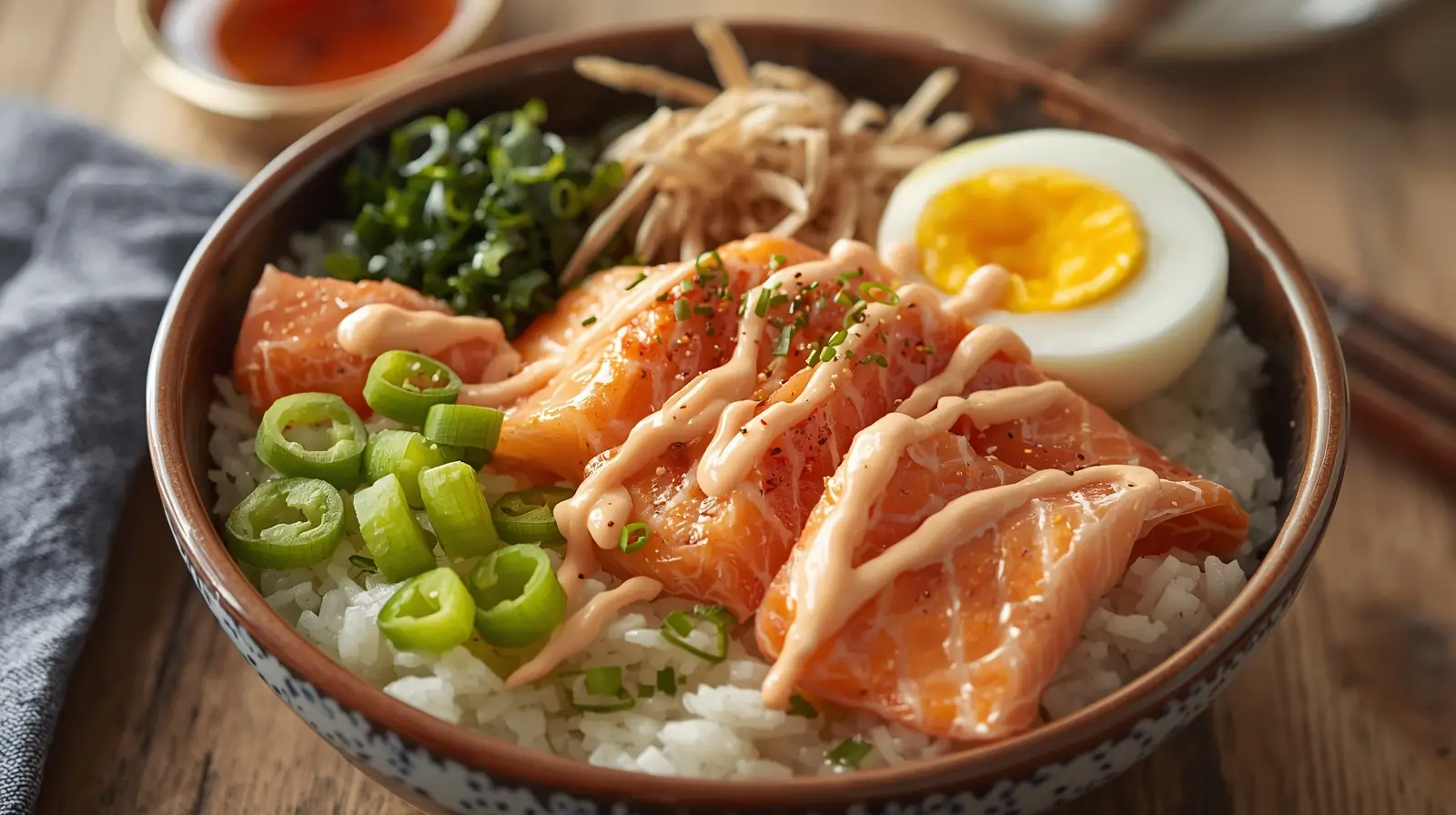
This isn’t your typical leftover makeover – this salmon and rice bowl is the kind of meal that makes you want to cook extra salmon on purpose. Flaky fish paired with warm rice steamed with soy sauce, zigzags of creamy Kewpie mayo and bright red sriracha on top. Each bite delivers that perfect balance of savory, slightly sweet, creamy, and spicy. Restaurant-quality flavor, ready faster than delivery.
Table of Contents
After the step-by-step recipe, you’ll find tips, variations, and techniques to make this salmon and rice bowl your own.
Recipe Overview
| Prep Time | Cook Time | Total Time | Servings |
|---|---|---|---|
| 5 mins | 15 mins | 20 mins | 2 |
Ingredients
For the Rice Base:
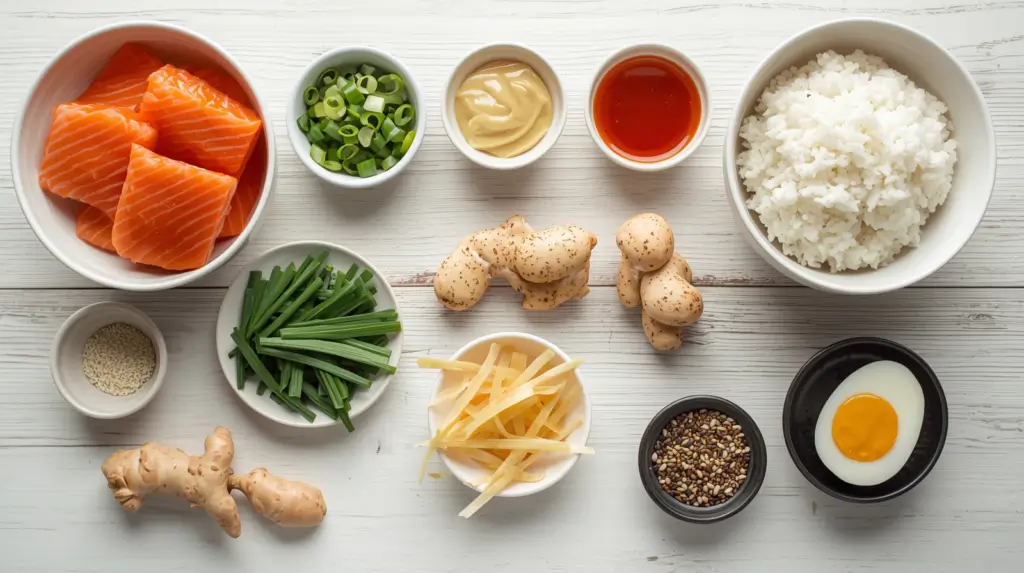
- 2 cups cooked Japanese short-grain rice (day-old rice works beautifully here)
- 2 tablespoons soy sauce (regular or low-sodium)
- 1 teaspoon sesame oil
- 1/4 cup water for steaming
For the Salmon:
- 8 oz cooked salmon (leftover grilled, baked, or pan-seared works perfectly)
- 1 teaspoon sesame oil
- Pinch of salt and pepper
The Essential Toppings:
- 3 tablespoons Kewpie mayo (this is non-negotiable – regular mayo just doesn’t hit the same)
- 2 teaspoons sriracha (adjust to your heat preference)
- 2 tablespoons furikake seasoning
- 1 sheet nori, cut into thin strips
- 2 green onions, sliced thin on the bias
- 1 teaspoon toasted sesame seeds
For Serving:
- Pickled ginger (adds a bright, palate-cleansing element)
- Sliced avocado for creaminess
- Cucumber ribbons for crunch
- Soft-boiled egg with that perfect jammy yolk
- Extra sriracha for heat lovers
Recipe Variations & Adaptations
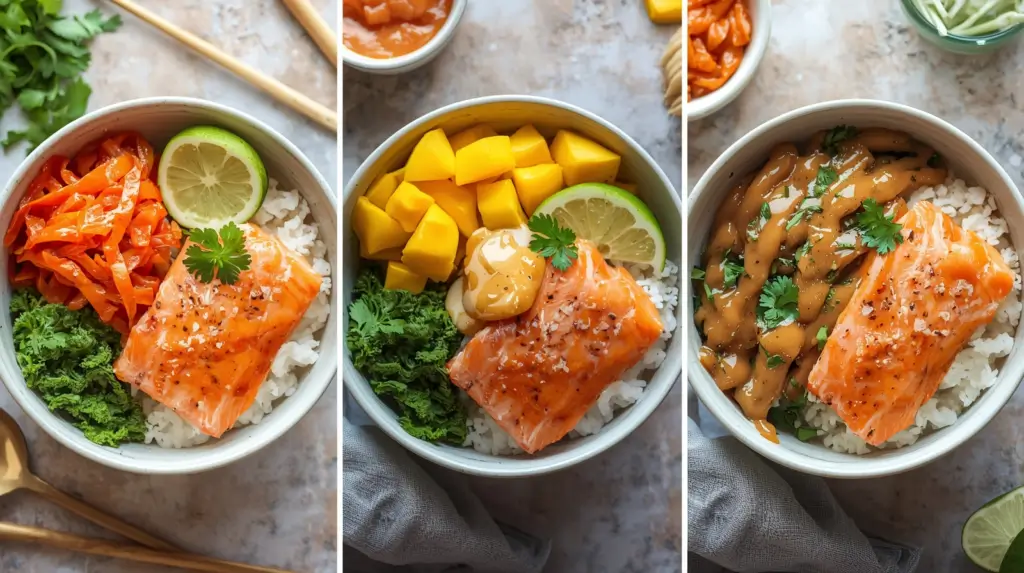
- Kimchi Salmon Bowl: Add 1/2 cup chopped kimchi and swap sriracha for gochujang mixed with a touch of honey
- Teriyaki Style: Mix teriyaki sauce into the rice instead of soy sauce, top with pickled ginger
- Spicy Mayo Version: Mix sriracha directly into the Kewpie mayo for even heat distribution
- Tropical Twist: Top with diced mango and a squeeze of lime juice for surprising sweetness
- Extra Protein: Add edamame or a second soft-boiled egg
- Vegetable Boost: Include quick-pickled cucumbers, shredded carrots, or blanched spinach
- Low-Carb Option: Replace rice with cauliflower rice (though the texture won’t be quite the same)
Timing & Temperature Guide
Planning Your Schedule
This salmon rice bowl comes together in twenty minutes from start to finish with leftover rice and salmon. Even cooking rice from scratch keeps you under 30 minutes. While rice warms, you’re flaking salmon and prepping toppings.
The Temperature Sweet Spot
Here’s the thing about temperature with this salmon rice bowl – you want warm rice and room-temperature salmon. I don’t even bother reheating the salmon most of the time. The warmth from the rice takes the chill off, and you get this nice contrast when the cool Kewpie mayo hits everything. That mix of temperatures actually makes each bite more interesting.
Step-by-Step Instructions: Building Your Perfect Bowl
Getting Your Rice Ready
Initial Prep:
- Pull your leftover rice from the fridge and break up any clumps gently with your fingers – cold rice tends to stick together in these solid chunks
- Transfer it to a medium saucepan or microwave-safe bowl
- This is where the magic starts – drizzle that soy sauce evenly across the rice, watching those beautiful dark streaks run through the white grains
- Add your sesame oil and about 1/4 cup of water to help create steam
- The rice should look slightly moistened but not swimming in liquid – you’re going for steamed, not boiled
The Warming Process:
- For stovetop method: place over medium-low heat with a tight-fitting lid
- Let it steam for 8-10 minutes, giving it one gentle stir at the halfway mark to ensure even heating
- You’ll know it’s ready when you see steam escaping from under the lid and the rice looks fluffy and separated
- For microwave method: cover with a damp paper towel and heat in 1-minute intervals, stirring gently between each
- The goal is rice that’s hot, fluffy, and subtly seasoned – not mushy, not dried out, but just right
Preparing the Salmon
The Flaking Technique:
- Take your leftover salmon out of the fridge and let it sit for about 5 minutes – you want to take the harsh chill off
- If there’s skin on the bottom, peel it away gently with a fork – it should come off easily if the salmon was cooked properly
- Using two forks in a pulling motion, separate the salmon into chunky flakes
- Think substantial, bite-sized pieces here, not tiny shreds – you want real texture and presence in each mouthful
- If your salmon feels too cold, warm it gently for 20-30 seconds in the microwave with a tiny splash of water to prevent drying
Seasoning Check:
- Taste a piece of your salmon – is it well-seasoned from yesterday’s cooking?
- If it needs a little boost, a light drizzle of sesame oil and a tiny pinch of salt works wonders
- Toss gently to distribute any added seasonings without breaking up the flakes too much
- The salmon should taste good on its own because it’s going to be a star player in this bowl
Building Your Bowl Like a Pro
Layering Strategy:
- Start with a generous mound of that warm, soy-kissed rice as your foundation – don’t be shy here
- Use the back of your spoon to shape it slightly, creating a gentle well in the center
- This isn’t just aesthetic – it helps the toppings nestle in nicely and creates visual interest
- Arrange your salmon flakes over the top, distributing them evenly but keeping it casual and natural-looking
- Let some rice peek through around the edges – you want layers, not complete coverage
The Sauce Application:
- Here’s where presentation meets flavor: grab your Kewpie mayo
- Drizzle it back and forth across the bowl in thin, deliberate lines – think of it like drawing
- Now take your sriracha and create a contrasting pattern
- I like to go perpendicular to the mayo lines, creating this cool crosshatch effect that looks impressive but takes zero skill
- Don’t mix everything together yet – the visual contrast of creamy yellow mayo and vibrant red sriracha is half the appeal and builds anticipation
Final Touches & Plating:
- Sprinkle furikake generously across everything – this seasoning blend is essential, not optional
- Scatter your thin-sliced green onions, letting them fall naturally rather than placing them too precisely
- Arrange those nori strips artfully on top
- Add a light shower of sesame seeds for that finishing touch
- If you’re including avocado slices or a soft-boiled egg, place them now with intention
- Stand back and admire your work for exactly 5 seconds before you dive in
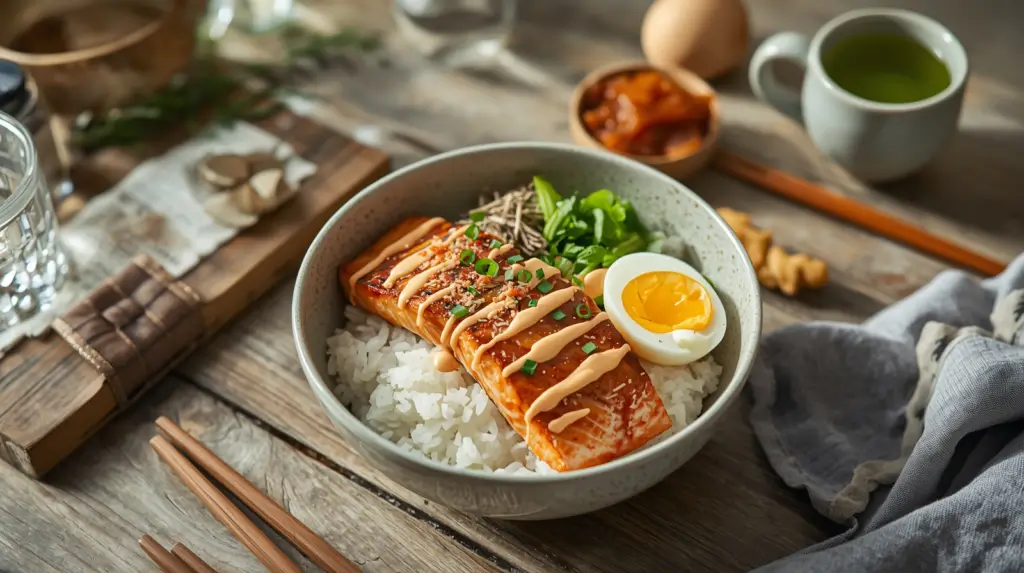
The First Bite Strategy
Here’s how I approach eating this salmon and rice bowl: I grab my chopsticks and make sure that first bite includes a little bit of everything. Rice from the bottom, a chunk of salmon, a deliberate swipe through both the mayo and sriracha, plus some of those toppings. That’s when the magic of this salmon rice bowl reveals itself – all those flavors and textures coming together in one perfect mouthful. The creamy, the spicy, the savory, the slightly sweet – it’s a symphony.
Nutrition Meets Comfort Food Satisfaction
One thing I genuinely appreciate about this salmon and rice bowl is how it manages to feel indulgent while actually being pretty nutritious. You’re getting high-quality protein and those omega-3 fatty acids from the salmon, complex carbohydrates for sustained energy from the rice, and minimal processed ingredients overall.
The Kewpie mayo adds richness, yes, but you’re using just a few tablespoons across the whole salmon rice bowl – it’s not like you’re drowning everything in sauce. When you add vegetables like cucumber or avocado, you’re creating a meal that’s surprisingly well-balanced. It’s comfort food that doesn’t leave you feeling sluggish thirty minutes later.
| Nutrient | Amount per Serving |
|---|---|
| Calories | 485 |
| Total Fat | 16g |
| Saturated Fat | 3g |
| Cholesterol | 65mg |
| Sodium | 780mg |
| Total Carbohydrates | 52g |
| Dietary Fiber | 2g |
| Sugars | 2g |
| Protein | 28g |
| Omega-3 Fatty Acids | 1.8g |
| Vitamin D | 45% DV |
| Vitamin B12 | 85% DV |
Curious about the tricks that guarantee perfect results? Keep reading!
Why Leftover Salmon Works Perfectly Here
Here’s something I’ve learned: leftover salmon is actually better for this salmon rice bowl than freshly cooked fish. When salmon sits overnight, the flavors develop and the texture firms up slightly, which means it flakes more cleanly. Fresh-cooked salmon can be too tender and falls apart into mush when you try to flake it.
Plus, there’s something psychologically satisfying about transforming yesterday’s dinner into something that feels completely new. My sister once told me she started cooking extra salmon on purpose just so she’d have leftovers for this bowl the next day. That’s when you know a recipe works.
Selecting the Right Salmon for Maximum Results
Not all salmon is created equal when it comes to this salmon rice bowl, and I’ve tested enough variations to have strong opinions. Leftover salmon works beautifully here, but the original cooking method and salmon type both matter more than you might think.
- Wild Sockeye Salmon: My personal favorite for this salmon and rice bowl. It has a firmer texture and more pronounced flavor that stands up beautifully to the bold seasonings. The deep red color also makes the bowl look more vibrant and appetizing.
- Atlantic Farmed Salmon: Fattier and more buttery, which creates a luxurious mouthfeel when it mixes with the rice. The milder flavor lets the toppings shine more, which some people prefer.
- King Salmon: If you’re feeling fancy, king salmon’s rich, almost buttery texture is incredible here. It flakes into these gorgeous, thick pieces that look impressive in the bowl.
- What to Avoid: Salmon that’s been heavily glazed or sauced in its original preparation doesn’t work as well. You want clean fish flavor that can accept these new seasonings.
Working With Different Cooking Methods
Leftover grilled salmon is phenomenal in this salmon rice bowl. Those char marks add a subtle smoky element that plays really well with the sweet-tangy Kewpie mayo. Pan-seared salmon with crispy skin can be chopped up and mixed in for extra texture. Baked salmon tends to be the most consistently moist, which prevents any dryness issues. Even poached salmon works surprisingly well with its delicate texture and clean flavor.
Make-Ahead Strategy for Stress-Free Meals
Cook rice on Sunday, portion into containers – keeps 4-5 days refrigerated. Grill or bake several salmon portions at once for multiple salmon rice bowls throughout the week, store whole (don’t flake until serving to maintain moisture). Slice green onions, store in container with damp paper towel. Cut nori strips, keep in airtight container. When it’s time to eat, you’re 10 minutes from a complete meal.
Professional Tips That Make All the Difference
After making this salmon and rice bowl more times than I can count, I’ve figured out what separates a good bowl from an absolutely outstanding one. These aren’t complicated techniques, but they matter significantly.
Mistakes That’ll Ruin Your Bowl
- Over-flaking the Salmon: Mushy, paste-like salmon is depressing. Keep those flakes chunky and substantial for better texture and visual appeal.
- Not Warming the Rice Properly: Cold rice straight from the fridge doesn’t absorb flavors well and creates an unpleasant temperature contrast with the toppings.
- Too Much Soy Sauce: The rice should be subtly seasoned, not swimming in soy sauce. You can always add more, but you can’t remove it once it’s there.
- Skipping the Furikake: This isn’t just a garnish – it’s essential to the flavor profile and adds those crucial umami notes.
- Using Regular Mayo: I cannot stress this enough – Kewpie mayo is fundamentally different and worth seeking out at an Asian grocery store or online.
Simple Tricks That Elevate Your Bowl
Don’t Overmix the Salmon: Keep those flakes chunky. You want visible pieces of fish, not salmon paste mixed into rice.
Season the Rice While It Steams: The soy sauce needs to be added during the warming process, not after. This way the rice actually absorbs the flavor instead of just getting coated.
Let Your Salmon Come to Room Temperature: Take it out of the fridge while you’re warming the rice. Cold salmon straight from the fridge doesn’t taste as good and the texture is off.
Use Real Kewpie Mayo: I know I keep saying this, but regular mayo genuinely doesn’t work the same way. The slight sweetness and tang from Kewpie is what makes this bowl sing.
The Kimchi Salmon Bowl Transformation
Use 1/2 cup well-fermented kimchi, chopped into bite-sized pieces. Mix a tablespoon of kimchi juice into rice with the soy sauce for that tangy, funky flavor. Arrange kimchi around salmon, swap sriracha for gochujang mixed with honey. Top with a fried egg – when that runny yolk breaks, it creates incredible sauce. The fermented notes cut through richness perfectly.
Serving This Salmon Rice Bowl Like a Pro
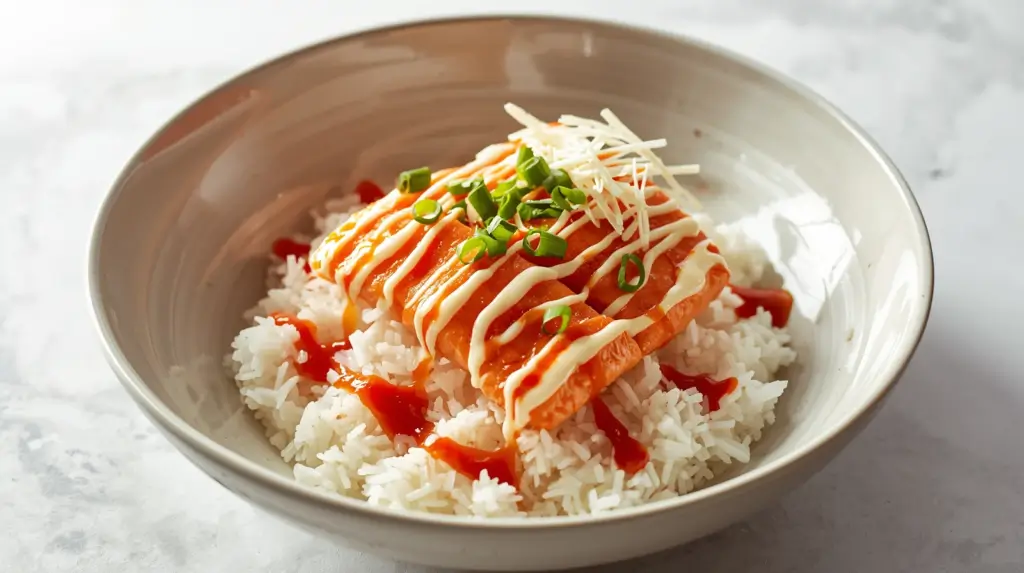
Presentation That Impresses
The beauty of a well-made salmon rice bowl is in its casual elegance. You’re not trying to create something fussy or overly composed, but there’s an art to making it look appealing. Use a wide, shallow bowl rather than a deep one – this shows off all your components and makes eating easier.
Arrange elements thoughtfully rather than just dumping everything in a pile. The salmon should be visible, the sauce drizzles should create visual interest, and those green onion slices and nori strips should look like they were placed with purpose, even if you were actually just working quickly.
Perfect Pairings:
- Miso soup with tofu and wakame seaweed
- Quick-pickled cucumber salad with rice vinegar
- Edamame sprinkled with sea salt
- Seaweed salad with sesame dressing
- Unsweetened iced green tea or cold barley tea
- Sparkling water with yuzu or lime
Storing and Reviving Your Bowl
Let’s be honest – these salmon rice bowls are so good they rarely have a chance to become leftovers. But if you’re meal prepping or somehow have restraint, here’s how to handle storage properly.
Store components separately if possible. Keep the rice in an airtight container for up to 4 days in the fridge. The salmon should be stored whole (not flaked) in a separate container for up to 3 days – this prevents it from drying out. The toppings stay fresh in their own small containers.
Reheating for Best Results: Never microwave an assembled salmon and rice bowl – it turns everything into a hot mess. Instead, reheat just the rice with a splash of water, either in the microwave covered with a damp paper towel or in a covered pot on the stovetop. The salmon can come to room temperature or be gently warmed for 20-30 seconds. Don’t store assembled bowls with the sauces already drizzled – the Kewpie mayo will separate and look unappetizing, and the furikake will get soggy. Always add these fresh right before eating.
FAQ: Everything You Want to Know
Can I use any type of cooked salmon for this bowl? Absolutely. Grilled, baked, pan-seared, even poached salmon works beautifully. Each cooking method brings slightly different flavors and textures to your salmon rice bowl, but they all work. Just avoid salmon that was heavily sauced or glazed in its original preparation.
What if I don’t have Kewpie mayo? You can make a substitute by mixing regular mayo with a small splash of rice vinegar and a pinch of sugar, but I strongly encourage you to seek out real Kewpie. It’s available at most Asian grocery stores and even many regular supermarkets now. The flavor difference is significant.
How spicy is this salmon rice bowl? As written, it’s fairly mild – the sriracha adds more flavor than serious heat. If you want it spicier, increase the sriracha or add some chili oil. For heat-averse eaters, you can use just a tiny amount or skip it entirely.
Can I make this without rice? Technically yes – you could use cauliflower rice for a low-carb version of this salmon and rice bowl. But honestly, the starchiness and texture of real rice is integral to what makes this bowl so satisfying. It won’t be quite the same experience.
How can I keep my salmon from drying out? The key is gentle reheating with a bit of moisture. Add a tiny splash of water and cover it while warming, or better yet, just bring it to room temperature rather than heating it at all. The warmth from the rice will take the chill off.
What’s the best way to eat this – mixed together or keeping components separate? I recommend appreciating the visual presentation for a moment, then mixing everything thoroughly. Each bite should ideally have rice, salmon, both sauces, and toppings. Some people prefer eating components somewhat separately – it’s completely personal preference.
How far in advance can I prep components? Rice keeps well for 4-5 days refrigerated. Cooked salmon stays good for 3 days if stored properly. Sliced green onions last 2-3 days in a container with a damp paper towel. Prep everything on Sunday for easy weekday lunches or dinners.
There’s something deeply satisfying about transforming yesterday’s dinner into today’s crave-worthy lunch or dinner. This salmon and rice bowl proves that simple ingredients, thoughtfully combined, can create meals that feel special without demanding hours in the kitchen.
Leave a Review
There are no reviews yet. Be the first one to write one.