Vibrant Green Matcha Salad Dressing Recipe You’ll Love
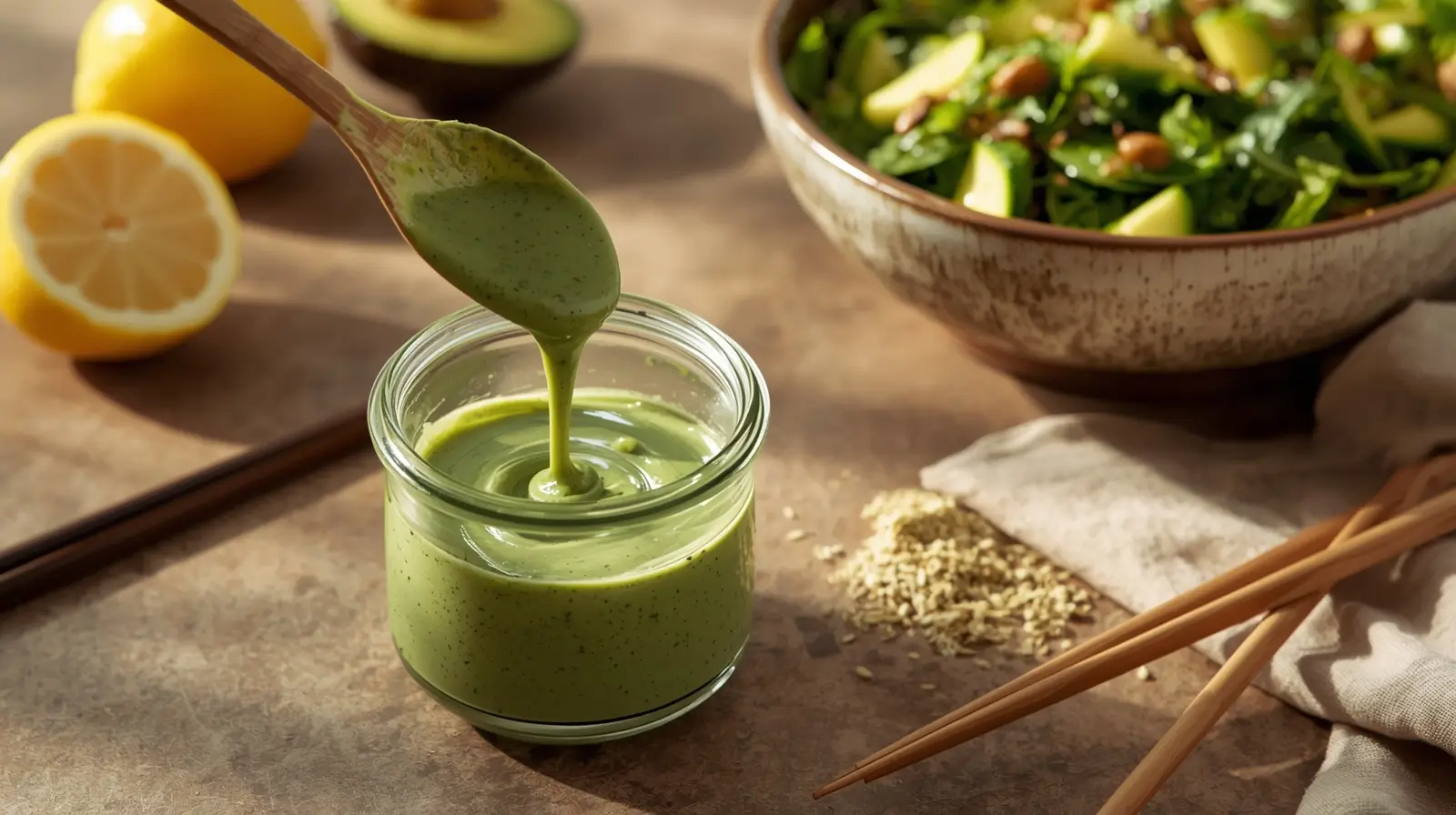
When I first tasted a matcha salad dressing recipe at a small Japanese fusion café in Portland, I remember thinking it was the most unexpectedly brilliant thing I’d encountered in months. The earthy, slightly grassy notes of matcha paired with tangy rice vinegar created this gorgeous emerald-green drizzle that made even the simplest bowl of greens feel special. That vivid color alone – like liquid jade – had everyone at the table pulling out their phones before we even took a bite.
This healthy salad dressing takes the beloved flavors of green tea and transforms them into something savory, creamy, and absolutely addictive. Unlike most bottled dressings hiding on grocery store shelves, this matcha vinaigrette brings genuine depth and a whisper of umami that makes vegetables taste like they’ve been waiting their whole lives for this moment. The best part? You can whip this up in under five minutes with ingredients you probably already have.
Table of Contents
After the recipe, discover clever tips and variations to elevate your dish
Recipe Overview
| Prep Time | Total Time | Servings | Dietary |
|---|---|---|---|
| 5 mins | 5 mins | 8-10 (about 1 cup) | Vegan, Gluten-Free |
Ingredients
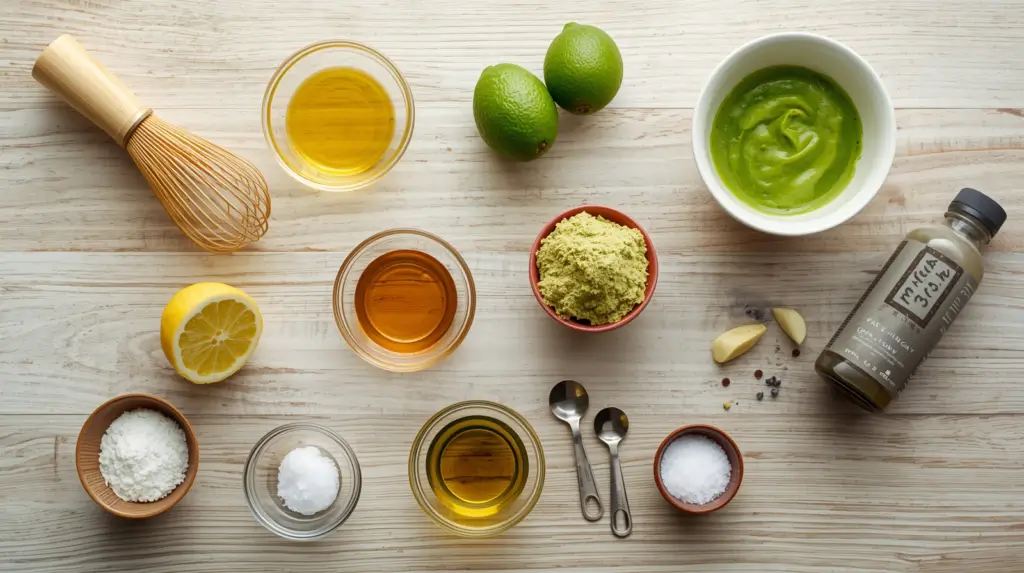
For the Matcha Salad Dressing Recipe:
- 2 teaspoons culinary-grade matcha powder (not ceremonial grade)
- 3 tablespoons rice vinegar (unseasoned)
- 2 tablespoons fresh lemon juice (about 1 lemon)
- 1 tablespoon pure maple syrup or honey
- 1 teaspoon Dijon mustard
- 1 small clove garlic, finely grated
- 1/3 cup neutral oil (avocado, grapeseed, or light olive oil)
- 2 tablespoons water (more as needed)
- 1/2 teaspoon sea salt
- 1/4 teaspoon white pepper (or black pepper)
Optional Flavor Enhancers:
- 1 teaspoon toasted sesame oil (adds nutty depth)
- 1/2 teaspoon fresh grated ginger
- 1 tablespoon tahini (for extra creaminess)
- Pinch of wasabi powder (for subtle heat)
Recipe Variations & Adaptations
- Creamy Asian Style: Add 2 tablespoons of silken tofu or cashew cream for a thicker, more luxurious texture that clings beautifully to salad greens.
- Citrus Explosion: Replace half the rice vinegar with fresh orange or yuzu juice for a brighter, sunnier version that’s perfect with spring vegetables.
- Miso Magic: Stir in 1 teaspoon of white miso paste for deeper umami notes that make this Japanese-style dressing even more authentic.
- Sweet & Savory Balance: Increase maple syrup to 2 tablespoons if you prefer a sweeter profile similar to commercial Asian dressings.
- Nut-Free Version: This vegan salad dressing is naturally nut-free, making it perfect for school lunches and gatherings.
- Herb Garden Fresh: Blend in fresh cilantro, basil, or mint for a green-on-green masterpiece with layers of fresh flavor.
Timing & Preparation Guide
Planning Your Perfect Dressing
The beauty of this matcha salad dressing recipe lies in its simplicity. There’s no cooking involved, no complicated techniques – just straight-up mixing and shaking. However, allowing the dressing to rest for about 15 minutes before serving lets the matcha fully dissolve and the flavors marry together into something truly cohesive.
Why This Dressing Works Every Time
Unlike traditional green tea salad dressing that can taste bitter or one-dimensional, this recipe balances the naturally astringent matcha with sweetness, acidity, and fat in precise proportions. The Dijon mustard acts as an emulsifier, keeping everything silky smooth instead of separated and oily.
Preparation Timeline Table
| Phase | Duration | Notes |
|---|---|---|
| Ingredient Gathering | 2 minutes | Pre-measure everything for efficiency |
| Matcha Whisking | 1 minute | Critical for lump-free consistency |
| Emulsion Building | 2 minutes | Slow oil incorporation is key |
| Resting Period | 15 minutes | Optional but recommended |
| Storage Prep | 1 minute | Transfer to jar or bottle |
| Refrigerated Shelf Life | 5-7 days | Shake well before each use |
Step-by-Step Instructions: From Powder to Pour
Creating the Matcha Base
Sift and Prepare:
- Sift the matcha powder through a fine-mesh strainer into a medium bowl to eliminate any clumps. Trust me on this – those tiny green lumps can turn your beautiful dressing grainy.
- Add rice vinegar, lemon juice, and about 2 tablespoons of water to the bowl.
- Whisk vigorously for about 30 seconds until the matcha completely dissolves into the liquid. You should see a vibrant, uniform green color with no streaks or floating bits.
Build the Flavor Foundation:
- Add maple syrup, Dijon mustard, grated garlic, salt, and white pepper to your matcha mixture.
- Whisk everything together until you can’t see distinct ingredients anymore – it should look like a smooth, thin green soup.
- Taste at this point (yes, even though there’s no oil yet). This is your chance to adjust the sweet-tart-salty balance before moving forward.
Emulsifying Your Healthy Salad Dressing
The Slow Pour Technique:
- While whisking constantly with one hand, begin drizzling in the oil with the other. Start with just a few drops at a time.
- As the mixture begins to thicken and turn creamy (usually after about half the oil is incorporated), you can pour slightly faster while maintaining that constant whisking motion.
- Continue until all the oil is incorporated and the dressing has a beautiful, pourable consistency – think somewhere between heavy cream and yogurt.
Consistency Adjustments:
- If your dressing seems too thick, whisk in water one teaspoon at a time until it reaches your desired consistency.
- Too thin? Add another tablespoon of oil while whisking, or let it rest in the fridge for 15 minutes to thicken naturally.
- The dressing will thicken slightly as it chills, so keep that in mind.
Finishing Touches & Storage
Final Tasting and Tweaking:
- Give your matcha vinaigrette a final taste and adjust seasonings as needed. Sometimes it needs an extra pinch of salt or a squeeze more lemon to make everything pop.
- If you’re adding optional ingredients like sesame oil or ginger, fold them in now with a gentle whisk.
Proper Storage Method:
- Store the dressing in a clean glass jar or bottle with a snug-fitting lid.
- Store in the refrigerator for up to one week.
- The matcha may settle slightly – this is totally normal. Just shake vigorously for about 10 seconds before each use.
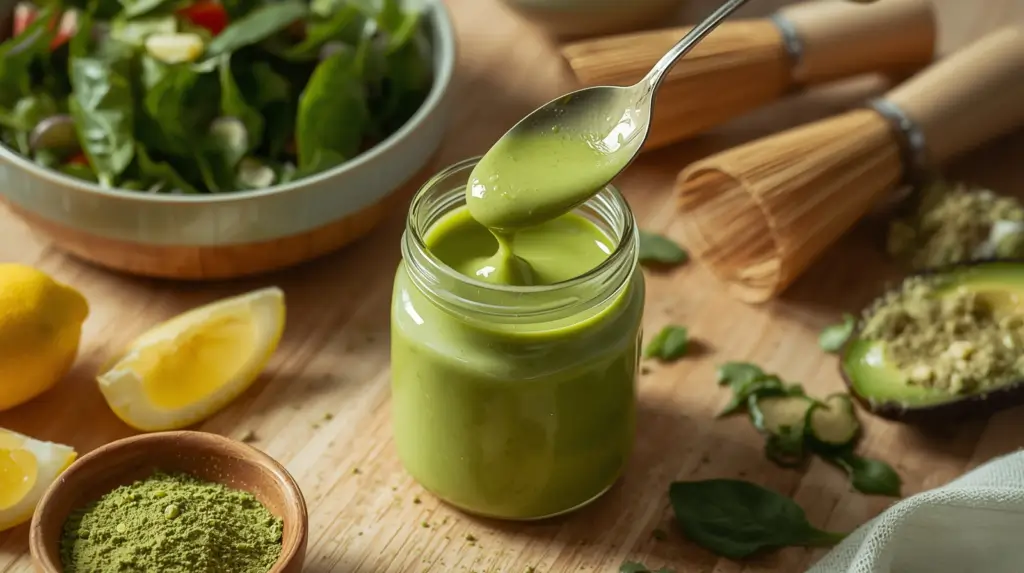
Nutritional Benefits Meet Vibrant Flavor
This matcha salad dressing recipe isn’t just about creating something gorgeous and delicious – it’s genuinely good for you. Matcha contains powerful antioxidants called catechins, particularly EGCG, which has been studied for its potential metabolism-boosting and anti-inflammatory properties. Unlike drinking matcha tea, using it in a matcha savory recipe like this lets you enjoy those benefits in a completely different context.
The healthy fats from the oil help your body absorb fat-soluble vitamins from your salad vegetables, while the vinegar may help with blood sugar management. It’s a win-win situation where flavor and nutrition shake hands.
| Nutrient | Amount per Serving (2 Tbsp) |
|---|---|
| Calories | 85 |
| Total Fat | 8g |
| Saturated Fat | 1g |
| Cholesterol | 0mg |
| Sodium | 125mg |
| Total Carbohydrates | 3g |
| Dietary Fiber | 0g |
| Sugars | 2g |
| Protein | 0g |
| Antioxidants | High (from matcha) |
| Vitamin C | 4% DV |
Love this recipe? Discover 4 more easy matcha recipes to try here!
Want to unlock the secrets behind this green magic? Read on
Why This Recipe Will Transform Your Salads Forever
- Brings authentic Japanese-style sophistication to everyday meals without any fuss
- Natural green color from matcha means no artificial dyes or questionable ingredients
- Works as both a light drizzle and a creamy coating depending on your preference
- Versatile enough for grain bowls, roasted vegetables, and even as a marinade
- Budget-friendly compared to specialty store-bought dressings that cost $8-12 per bottle
- Makes vegetables genuinely exciting – even kids often love the mild, slightly sweet flavor
From Ordinary Bottle to Culinary Game-Changer
Most salad dressings follow a pretty predictable pattern: oil, vinegar, maybe some herbs if you’re lucky. But this green tea salad dressing breaks all the rules in the best possible way. The matcha adds this subtle complexity – earthy but not heavy, vegetal but not grassy, with a hint of natural sweetness that plays beautifully against acidic ingredients.
The Cultural Crossover That Works
Japanese cuisine has always celebrated matcha in sweets – lattes, ice cream, mochi, cookies. But using matcha in savory applications? That’s where things get really interesting. This vegan salad dressing bridges traditional Japanese flavors with Western salad culture, creating something that feels both familiar and totally new.
I remember the first time I served this at a dinner party. One guest, who claimed to “hate anything green and healthy,” went back for seconds on the salad. When I told her it was matcha, she looked genuinely shocked. Sometimes the best flavors sneak up on you.
The Science of Why It Tastes So Good
The combination of umami from the matcha, sweetness from maple syrup, acidity from vinegar and lemon, and richness from oil hits all the major taste receptors on your tongue. This is what chefs call “balanced flavor” – when no single element dominates, but everything works together to create something greater than the sum of its parts.
The Dijon mustard plays a crucial role beyond just emulsification. It adds a subtle background warmth and depth that keeps the dressing from tasting too “green” or one-note.
What Makes This Different from Store-Bought Options
| Feature | Store-Bought Asian Dressing | This Matcha Salad Dressing Recipe |
|---|---|---|
| Real Matcha Content | Often uses food coloring instead | 2 tsp pure matcha powder |
| Added Sugars | 6-10g per serving | 2g from natural maple syrup |
| Preservatives | Multiple chemical preservatives | None – naturally preserved by acid |
| Ingredient List | 15-20+ ingredients | 10 simple, recognizable ingredients |
| Cost Per Batch | $8-12 for 12 oz | Approximately $3-4 for same amount |
| Freshness | Sits on shelf for months | Made fresh in your kitchen |
| Customization | Take it or leave it | Endless flavor adaptations |
Selecting Ingredients That Make the Difference
Creating an exceptional matcha vinaigrette starts with understanding your ingredients. Not all matcha is created equal, and choosing the right supporting cast makes all the difference between “pretty good” and “where has this been all my life?”
- Matcha Quality Matters: Use culinary-grade matcha, not the expensive ceremonial stuff. Ceremonial matcha is designed for traditional tea preparation and its delicate flavors can get lost in a dressing. Culinary-grade has a stronger, more robust flavor that stands up to the other ingredients. Look for vibrant green color – if it’s brownish or olive-toned, it’s likely old.
- Oil Selection Strategy: Neutral oils like avocado or grapeseed let the matcha shine through without competing. Extra-virgin olive oil can work, but choose a mild variety – you don’t want aggressive olive flavor fighting with delicate green tea notes.
- Rice Vinegar vs. Other Vinegars: Unseasoned rice vinegar has a gentler, rounder acidity compared to sharp white vinegar or even apple cider vinegar. This softness complements matcha’s natural flavor profile beautifully. Seasoned rice vinegar contains added sugar and salt, which throws off the balance.
- Fresh Lemon Juice is Non-Negotiable: Bottled lemon juice tastes flat and metallic compared to fresh. The bright citrus oils in fresh lemon juice add a dimension that can’t be replicated.
Make-Ahead Strategies for Busy Weeks
This healthy salad dressing is actually one of those rare recipes that gets better after sitting for a day. The flavors meld together and the matcha loses any trace of bitterness, becoming mellow and integrated. Make a double batch on Sunday and you’ve got instant salad upgrades all week long.
Store in a glass jar rather than plastic – matcha’s natural oils can sometimes pick up plastic flavors over time. A mason jar or old jam jar works perfectly. Label the jar with the date to track when it was prepared.
Insider Tips for Restaurant-Quality Results
Transform your matcha salad dressing recipe from homemade to “did you actually make this yourself? Using techniques I’ve gained from years of experimenting.
Common Mistakes to Avoid
- The Clump Catastrophe: Skipping the sifting step leaves you with little green lumps that never quite dissolve. Take the extra 30 seconds to sift – your smooth, luxurious dressing will thank you.
- Oil Speed Disaster: Dumping all the oil in at once breaks the emulsion, leaving you with separated, greasy dressing. Slow and steady wins the race here. Consider it like making mayonnaise—taking your time really pays off.
- Over-Salting Surprise: Matcha has natural umami that amplifies saltiness. Start with less salt than you think you need, then adjust upward. You can always add more, but you can’t take it out.
- Temperature Troubles: Using cold oil straight from the fridge makes emulsification harder. Let your oil sit at room temperature for 15 minutes before making the dressing.
Professional Techniques That Elevate Everything
The Double-Whisk Method: Use a small whisk for the initial matcha dissolving, then switch to a larger balloon whisk for emulsification. The extra air incorporation creates a lighter, fluffier texture.
Taste Layer by Layer: Taste after mixing the matcha base, taste again after adding seasonings, and taste once more after emulsifying. This helps you understand how flavors develop and build on each other.
The Shake Test: After making your dressing, put the lid on and shake vigorously for 10 seconds. If it doesn’t stay emulsified, whisk in 1/2 teaspoon of Dijon mustard to stabilize it.
Creative Variations on This Green Tea Salad Dressing
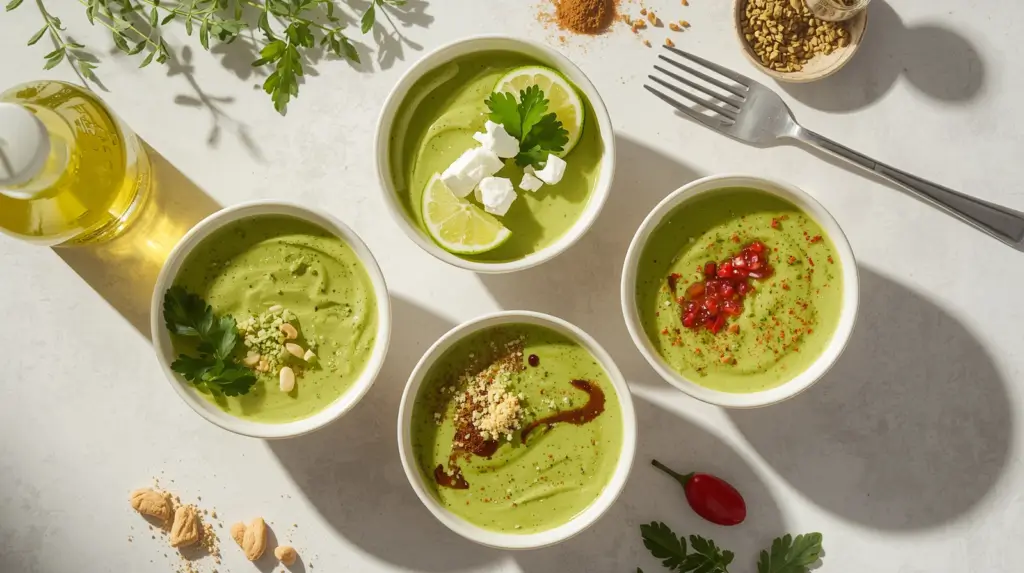
Global Flavor Adventures
Mediterranean Matcha Fusion: Replace rice vinegar with white balsamic, add fresh oregano and a pinch of sumac. Drizzle over roasted vegetables with feta cheese for a cross-cultural masterpiece.
Thai-Inspired Twist: Add 1 tablespoon of lime juice, 1 teaspoon of fish sauce (or soy sauce for vegan), and a pinch of red pepper flakes. Toss with cabbage slaw and crushed peanuts.
Mexican Green Goddess: Blend in fresh cilantro, a squeeze of lime, and a small serrano pepper. This Japanese-style base transforms into something perfect for taco salads and burrito bowls.
Middle Eastern Meets East Asian: Stir in tahini, a touch of cumin, and lemon zest. Use it on quinoa salads with roasted chickpeas and pomegranate seeds.
Perfect Pairings & Serving Suggestions
Best Salads for Your Matcha Salad Dressing Recipe
This versatile dressing plays well with so many different salad styles. Here are my favorites:
Crisp and Light Combinations:
- Baby spinach with sliced strawberries, toasted almonds, and shaved radish
- Mixed spring greens with cucumber ribbons, avocado, and edamame
- Butter lettuce with sugar snap peas, microgreens, and sesame seeds
- Shredded napa cabbage with carrots, bell peppers, and crispy wonton strips
Hearty Bowl Creations:
- Soba noodle salad with grilled tofu, scallions, and pickled ginger
- Brown rice bowl with roasted sweet potato, kale, and chickpeas
- Quinoa salad with edamame, cucumber, and seaweed salad
- Sushi rice bowl with smoked salmon, avocado, and nori strips
Beyond Salads: Unexpected Uses
Don’t limit this green tea salad dressing to just salads. It’s incredibly versatile:
- Marinade Magic: Use it to marinate chicken, fish, or tofu before grilling. The acidity tenderizes while the matcha adds gorgeous color.
- Vegetable Dip: Thicken it slightly with Greek yogurt or tahini and use as a dip for crudités.
- Grain Bowl Drizzle: Perfect over warm grain bowls, adding moisture and flavor to every bite.
- Sandwich Spread: Thin it slightly and use instead of mayo on sandwiches and wraps.
Storage Secrets & Smart Repurposing
Your matcha vinaigrette lives its best life in the refrigerator, staying fresh and vibrant for 5-7 days when stored properly. The key is using a clean jar with a tight-fitting lid and keeping it away from strong-smelling foods (onions, garlic) that might influence its delicate flavor.
Signs Your Dressing Needs Replacing:
- Color fades from vibrant green to brownish or olive-green
- Off smell develops (should smell fresh and slightly grassy)
- Mold appears (though the acid should prevent this if stored properly)
- Separation that doesn’t re-emulsify when shaken
Rescue Mission for Separated Dressing: If your emulsion breaks, don’t panic. Pour the separated dressing into a blender, add 1 teaspoon of Dijon mustard, and blend on high for 30 seconds. This usually brings it back together beautifully.
Creative Uses for Leftover Dressing:
- Toss with hot pasta for an instant cold noodle salad
- Mix with mashed avocado for a green goddess-style spread
- Drizzle over steamed vegetables as a finishing sauce
- Use as a base for a creamy soup by whisking into warm vegetable broth
FAQ: Your Matcha Dressing Questions Answered
What’s the difference between ceremonial and culinary matcha for this recipe?
Ceremonial matcha is stone-ground from the youngest tea leaves and designed for traditional tea ceremonies. It’s delicate, smooth, and expensive. Culinary matcha comes from slightly older leaves, has a stronger flavor that holds up in recipes, and costs significantly less. For this matcha salad dressing recipe, culinary grade is actually better – its robust flavor doesn’t disappear when mixed with other ingredients.
Can I make this dressing without oil for an even healthier version?
You can reduce the oil to 2-3 tablespoons and replace the rest with more water or unsweetened plant milk, but the texture will be thinner and the flavors won’t blend as smoothly. Oil serves an important purpose beyond just calories – it carries flavor and creates the creamy mouthfeel that makes dressing satisfying.
Why does my matcha dressing taste bitter?
Bitterness usually comes from either old matcha (check the expiration date), using too much matcha, or not balancing it with enough sweetness and acid. Try adding an extra 1/2 tablespoon of maple syrup or a squeeze more lemon juice. Also, make sure you’re whisking thoroughly – undissolved matcha powder can taste bitter.
How long does homemade matcha vinaigrette actually last?
When stored properly in the refrigerator, this vegan salad dressing stays fresh for 5-7 days. The acid from the vinegar and lemon juice acts as a natural preservative. After a week, the matcha may start to oxidize and lose its vibrant color, though it’s still safe to eat if it smells fine.
Can I use this as a marinade for meat or fish?
Absolutely! The acid in this healthy salad dressing makes it excellent for marinating. Use it on chicken, fish, shrimp, or tofu for 30 minutes to 2 hours before cooking. The matcha creates a beautiful light green coating when grilled or pan-seared.
What can I substitute for rice vinegar?
White wine vinegar or apple cider vinegar work in a pinch, though they’re sharper. Use slightly less (about 2.5 tablespoons instead of 3) and add an extra teaspoon of maple syrup to balance the stronger acidity. The flavor won’t be quite as authentically Japanese-style, but it’ll still be delicious.
Is this dressing keto-friendly?
Not quite, but close. The maple syrup adds 3g of carbs per serving. For keto, substitute with a sugar-free sweetener like monk fruit or erythritol. You might need to adjust the amount since these sweeteners have different sweetness levels than maple syrup.
Why is my dressing too thick/too thin?
Thickness depends on how much you whisk (which incorporates air) and the temperature of your ingredients. Too thick? Whisk in water 1 teaspoon at a time. Too thin? Whisk in more oil gradually, or add 1/2 teaspoon of Dijon mustard and whisk vigorously to create more emulsion.
Ready to transform your salads from boring to brilliant with this vibrant matcha salad dressing recipe? Grab your whisk and let’s make something beautiful together. Your greens will never be the same!
Leave a Review
There are no reviews yet. Be the first one to write one.