Crispy Roasted Cauliflower With The Za’atar Magic
When I first tasted crispy roasted cauliflower with za’atar at a small Mediterranean café in Portland, I couldn’t stop eating it. The edges were dark and caramelized, almost burnt in the best way, and that earthy za’atar created this addictive combination of herbal, nutty, and slightly tangy flavors I’d never experienced with cauliflower before. I went back three times that month.
This crispy roasted cauliflower recipe recreates that exact magic at home. High heat and proper spacing transform humble cauliflower into something with crispy, chip-like edges and a tender center. The warm spiced oil drizzle at the end—that’s the game-changer most recipes skip. Pile it over creamy hummus and you’ve got a dish that works as a stunning side or, honestly, just dinner on its own.
Table of Contents
After the step-by-step recipe, you’ll find plenty of tips for getting that perfect crisp, flavor variations, and ideas for turning leftovers into completely new meals.
Recipe Overview
| Prep Time | Cook Time | Total Time | Servings |
|---|---|---|---|
| 15 mins | 35-40 mins | 50-55 mins | 4-6 |
Ingredients
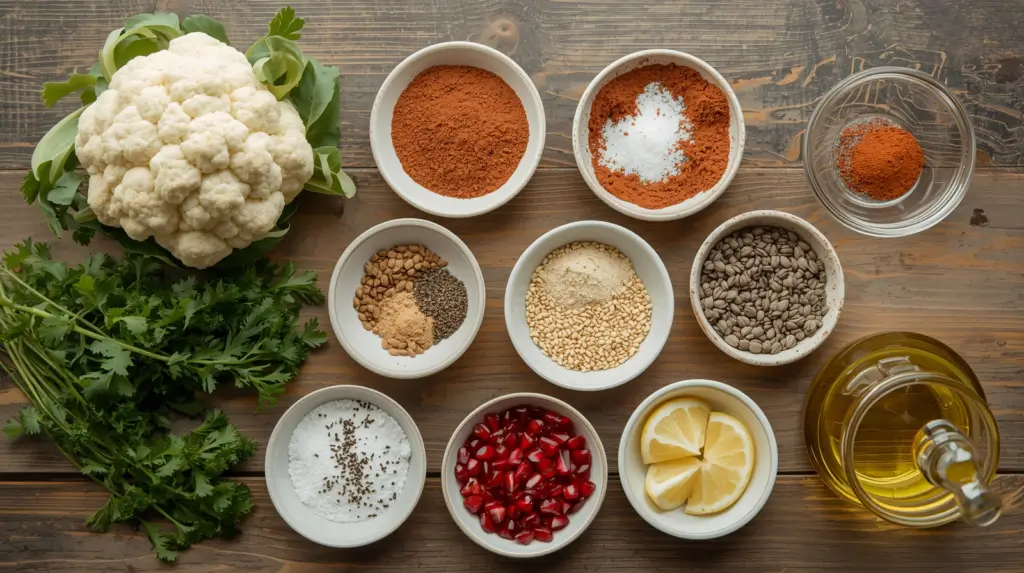
For the Cauliflower:
- 1 large head cauliflower (about 2 lbs), cut into florets or left whole
- 3 tablespoons olive oil
- 2 tablespoons za’atar spice blend
- 1 teaspoon smoked paprika
- 1 teaspoon garlic powder
- 1 teaspoon onion powder
- 3/4 teaspoon sea salt
- 1/4 teaspoon black pepper
- 1/4 teaspoon cayenne pepper (optional, for heat)
For the Spiced Oil Drizzle:
- 3 tablespoons olive oil
- 1 teaspoon za’atar
- 1/2 teaspoon smoked paprika
- 1 clove garlic, minced
- Pinch of red pepper flakes
For Serving:
- 1 cup hummus (store-bought or homemade)
- Fresh parsley or cilantro, chopped
- Lemon wedges
- Toasted pine nuts or sesame seeds (optional)
- Pomegranate seeds for garnish (optional)
Recipe Variations & Adaptations
- Spice Level Control: Skip the cayenne for mild, or double it if you like things fiery. The beauty of this Mediterranean roasted cauliflower is how flexible it is.
- Whole Head Drama: Keep the cauliflower intact for a stunning centerpiece presentation—just increase cooking time to 50-60 minutes and rotate once.
- Tahini Upgrade: Mix 1/4 cup tahini with lemon juice and water for a cauliflower tahini sauce drizzle instead of the spiced oil.
- Vegan Perfection: This recipe is naturally vegan and gluten-free, making it perfect for any gathering.
- Extra Crispy Version: After roasting, broil for 2-3 minutes watching carefully for maximum caramelization.
- Meal Prep Strategy: This spicy cauliflower oven-baked dish keeps well for 4 days and actually tastes better the next day.
Timing & Temperature Guide
Planning Your Cook Time
This recipe moves faster than you’d think. The actual hands-on time is maybe 10 minutes—cutting, tossing, arranging. Then the oven does the heavy lifting. The key is not rushing the roasting process. That golden-brown crispy exterior needs time to develop.
Heat Management for Maximum Crisp
The magic temperature for crispy roasted cauliflower sits at 425°F (220°C). Any lower and you’re steaming it. Any higher and the za’atar burns before the cauliflower cooks through. Your oven’s hot spots matter here—rotating the pan halfway through ensures even browning on all sides.
Temperature & Timing Breakdown
| Phase | Temperature | Duration |
|---|---|---|
| Oven Preheat | 425°F (220°C) | 15 minutes |
| Initial Roast | 425°F (220°C) | 20 minutes |
| Flip & Continue | 425°F (220°C) | 15-20 minutes |
| Optional Broil | High broil | 2-3 minutes |
| Spiced Oil Prep | Low heat on stovetop | 2 minutes |
| Rest Before Serving | Room temp | 3-5 minutes |
Step-by-Step Instructions: From Prep to Plate
Preparing Your Cauliflower
Cutting Technique:
- Remove outer leaves but save the core if roasting whole
- For florets, cut into similar sizes so they cook evenly—aim for 2-inch pieces
- Don’t worry about perfect cuts; irregular edges actually crisp up better
- Pat everything completely dry with paper towels (moisture is the enemy of crispy)
The Spice Coating:
- In a large bowl, whisk together olive oil with all your spices until it looks like a thick paste
- Add cauliflower florets and use your hands to massage the spice mixture into every crevice
- Make sure each piece is thoroughly coated—this isn’t the time to be shy with the seasoning
- Let it sit for 5 minutes while your oven finishes preheating so the spices can start working their magic
Roasting Process: How to Make Crispy Roasted Cauliflower with Za’atar
Oven Setup:
- Position your rack in the middle of the oven for even heat circulation
- Line a large baking sheet with parchment paper or use a well-seasoned baking sheet
- Don’t overcrowd—give each floret personal space or they’ll steam instead of roast
- Use two pans if needed; crowding is the number one mistake that ruins the crisp
The Roasting Method:
- Spread cauliflower in a single layer, flat side down when possible
- Roast for 20 minutes without touching it—resist the urge to check
- Flip each piece using tongs (yes, individually, it matters)
- Continue roasting for another 15-20 minutes until deeply golden and crispy at the edges
- The stems should be fork-tender and the florets should have dark caramelized spots
Creating the Warm Spiced Oil
Infusing the Oil:
- While cauliflower finishes roasting, heat olive oil in a small pan over low heat
- Add minced garlic and let it sizzle gently for about 30 seconds until fragrant but not brown
- Stir in za’atar, smoked paprika, and red pepper flakes
- Remove from heat immediately—you’re warming the spices, not cooking them
- The oil should smell incredible, almost floral from the za’atar
Plating Your Mediterranean Masterpiece
Assembly:
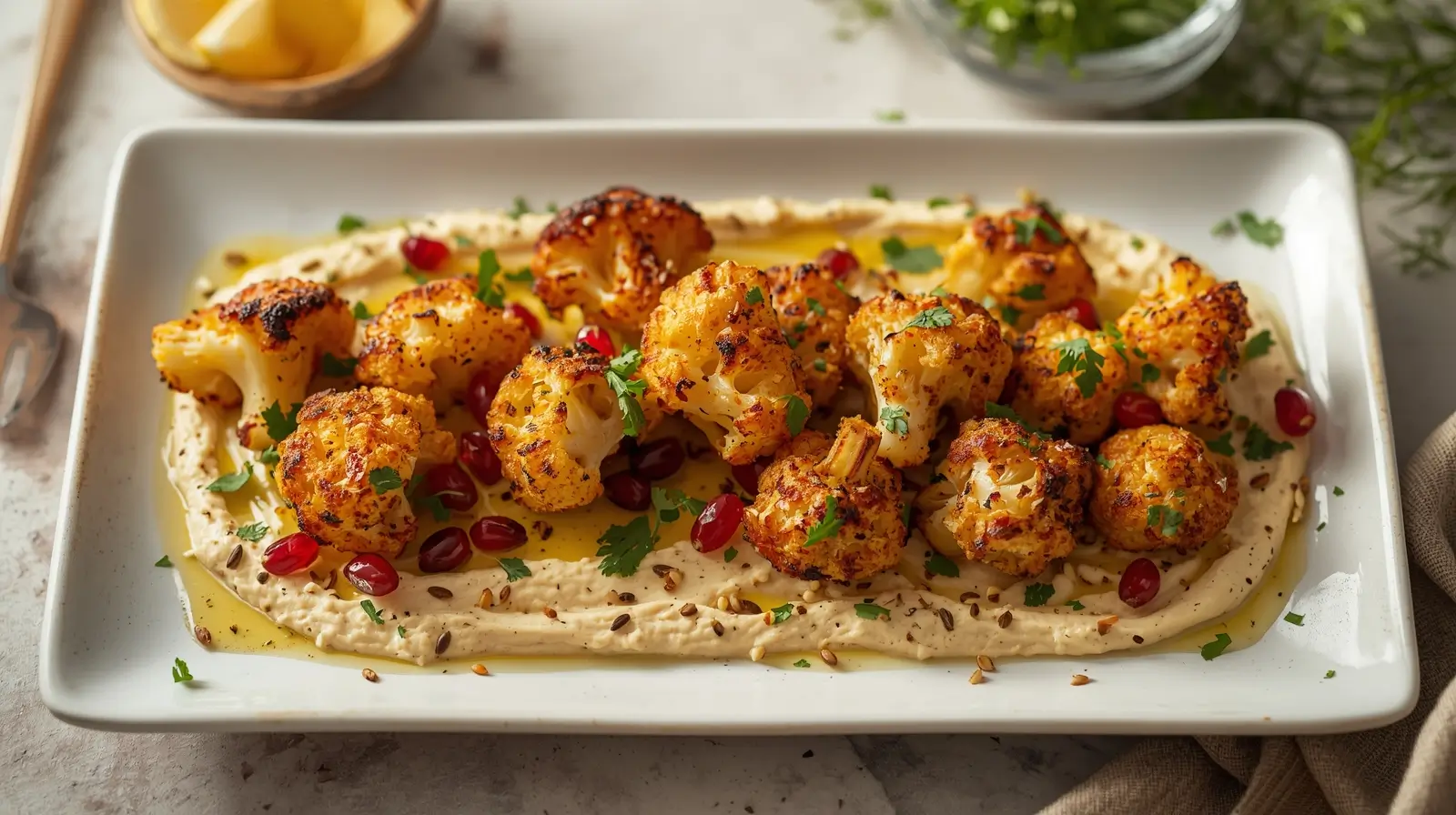
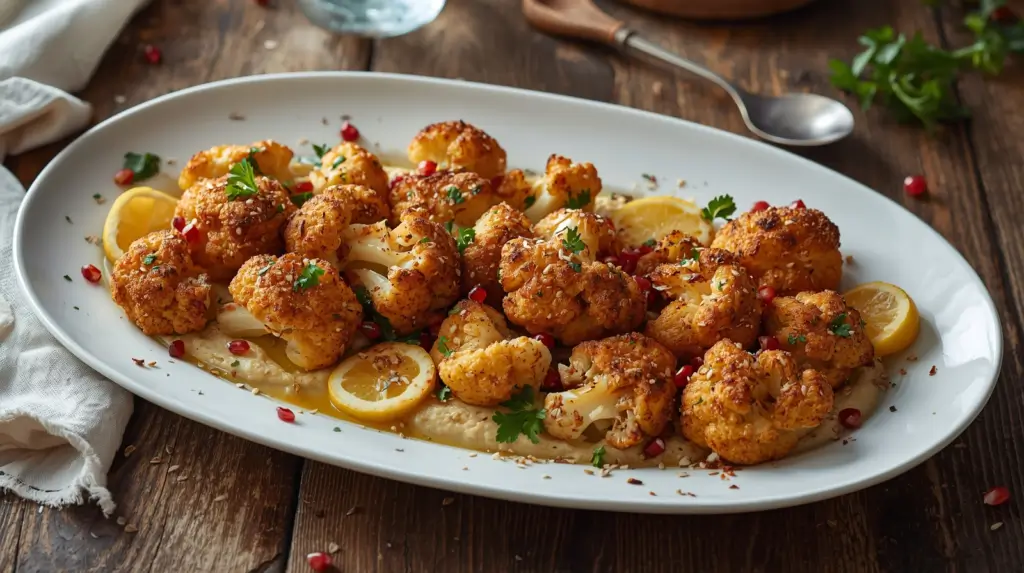
- Spread hummus across the bottom of a wide, shallow serving bowl or platter
- Pile the hot roasted cauliflower on top while it’s still steaming
- Drizzle that gorgeous spiced oil all over, making sure some pools around the edges
- The contrast between cool hummus and hot cauliflower is everything
Final Touches:
- Scatter fresh herbs generously—this needs that bright green pop
- Add a squeeze of fresh lemon juice right before serving
- Sprinkle toasted pine nuts or sesame seeds for extra texture
- If you’re feeling fancy, throw on some pomegranate seeds for color and a sweet-tart burst
Nutritional Power Hidden in Plain Sight
Here’s something I learned while testing this recipe dozens of times: you can absolutely load up on vegetables when they taste this good. Cauliflower is one of those vegetables people overlook, but it’s quietly impressive nutritionally. A single serving gives you most of your daily vitamin C, plenty of fiber to keep you full, and compounds called glucosinolates that researchers link to various health benefits.
What’s interesting about roasting at high heat: you’re actually preserving more nutrients than boiling would. Water-soluble vitamins stay in the vegetable instead of leaching out into cooking water that you’ll just pour down the drain.
| Nutrient | Amount per Serving (1 cup) |
|---|---|
| Calories | 165 |
| Total Fat | 12g |
| Saturated Fat | 1.5g |
| Cholesterol | 0mg |
| Sodium | 380mg |
| Total Carbohydrates | 14g |
| Dietary Fiber | 5g |
| Sugars | 4g |
| Protein | 5g |
| Vitamin C | 85% DV |
| Vitamin K | 20% DV |
| Folate | 15% DV |
Want to discover the stories and secrets that make this recipe special? Keep reading!
The za’atar spice blend isn’t just flavor—thyme and oregano bring antioxidants to the table, while sumac has been used in Middle Eastern medicine for centuries. Sesame seeds add healthy fats, a bit of protein, and minerals like calcium and iron. Olive oil carries fat-soluble vitamins and has anti-inflammatory properties that have been studied extensively in Mediterranean populations.
Why This Crispy Roasted Cauliflower Recipe Actually Works
- Transforms an inexpensive vegetable into something you’d happily order at a restaurant
- Za’atar brings complex, sophisticated flavors that taste nothing like typical “roasted vegetables”
- High-heat technique creates crispy edges while keeping the inside tender—two textures in one bite
- Works as a light main course, impressive side dish, or base for grain bowls throughout the week
- The warm spiced oil drizzle is what separates this from ordinary roasted cauliflower
- Leftovers stay delicious and transform into completely different meals
From Humble Vegetable to Weeknight Hero
Traditional roasted vegetables can be boring—let’s be honest. Toss with oil and salt, throw in the oven, hope for the best. This zaatar cauliflower recipe takes a different approach. The layered spice blend creates depth, while high-heat roasting transforms cauliflower’s natural sugars into golden, caramelized edges that taste almost sweet. Then that warm spiced oil at the end adds a final layer of flavor that soaks into all those nooks and crannies.
The Magic of High-Heat Caramelization
Here’s what’s actually happening in your oven: cauliflower contains natural sugars that stay locked inside when you steam or boil it. But when you roast at 425°F, those sugars migrate to the surface and caramelize, creating entirely new flavor compounds. The Maillard reaction—that’s the fancy name for browning—creates hundreds of different taste molecules that weren’t there before. It’s why roasted cauliflower tastes completely different from raw or steamed.
Za’atar amplifies this transformation. The blend typically combines dried thyme, oregano, sumac (which gives it that lemony tang), and toasted sesame seeds. When the heat hits those herbs, it releases their essential oils right as the cauliflower is browning. The sesame seeds toast even further, getting nutty and fragrant. The sumac’s citrus notes cut through the richness without needing actual lemon.
The smoked paprika isn’t traditional in Middle Eastern cooking, but it adds a subtle smokiness that makes people ask “did you grill this?” It’s the secret ingredient that adds complexity without announcing itself.
Why This Became My Favorite Way to Cook Cauliflower
After being obsessed with that Portland café version, I knew I had to recreate it at home. The first few attempts were… okay. Good, even. But something was missing that magical quality that made me keep going back. After maybe fifteen or twenty tries (my partner definitely got tired of eating cauliflower), I finally cracked the code: it’s that strategic flip halfway through plus the warm spiced oil at the end. Most home recipes skip the oil drizzle entirely, but that’s what transforms the dish from “nice side vegetable” to something you actually crave. The oil seeps into all those tiny floret crevices and carries the aromatic spices with it, creating little pockets of intense flavor.
The other revelation was learning to embrace the burnt edges. Not actually burnt, but those dark brown, almost crispy bits that form on the tips. Those are where all the flavor lives.
| Feature | Basic Roasted Cauliflower | This Za’atar Version |
|---|---|---|
| Seasoning | Salt and pepper only | Za’atar spice blend with smoky depth |
| Cooking Method | Single roast, no attention | Strategic flipping for maximum crisp |
| Texture Result | Uniformly soft | Crispy caramelized edges, tender center |
| Flavor Profile | Mild, one-note | Complex Middle Eastern aromatics |
| Serving Approach | Plain on the side | Warm spiced oil + hummus presentation |
| Next-Day Appeal | Soggy and sad | Actually improves with time |
Choosing Your Ingredients Wisely
Creating exceptional crispy roasted cauliflower starts at the grocery store. Not all cauliflower heads are created equal, and the quality of your za’atar makes or breaks the dish.
- Cauliflower Selection: Look for tight, compact heads without brown spots or gaps between florets. The leaves should look fresh and green, not wilted. Weight matters—pick the heaviest head, which means it’s dense and fresh. White or purple cauliflower both work beautifully.
- Za’atar Quality: If you can find a Middle Eastern grocery, buy za’atar there. The pre-mixed spice blends in regular supermarkets often sit on shelves too long and lose their punch. Fresh za’atar should smell intensely herbal and slightly lemony. You can also make your own—it’s just dried thyme, sumac, sesame seeds, and salt.
- Olive Oil Matters: Use a decent olive oil, but save your expensive finishing oil for drizzling at the end. For roasting, a mid-range extra virgin works perfectly and won’t smoke at 425°F.
- Paprika Note: Get actual smoked paprika (pimentón), not regular paprika with “smoke flavor” added. The real stuff from Spain has a depth that the imitation versions can’t match.
Make-Ahead Strategies
The beauty of crispy roasted cauliflower is that you can prep several components ahead to make weeknight cooking easier. Mix your spice blend up to two weeks in advance and store it in a small jar. Cut the cauliflower into florets the night before and keep them in a sealed container in the fridge—just make sure to dry them again before roasting.
The spiced oil actually tastes better when made an hour or two ahead, giving the garlic time to mellow. Just warm it gently before drizzling. The only thing that doesn’t work ahead is the actual roasting—cauliflower gets soggy when reheated, though there are ways around that (keep reading).
Professional Techniques for Home Cooks
After making this recipe more times than I care to admit, I’ve picked up some tricks that separate good roasted cauliflower from the kind that makes people go quiet because they’re too busy eating.
Mistakes That Kill Your Crisp
- The Moisture Trap: Wet cauliflower steams instead of roasts. After washing, you need to dry it thoroughly—I usually let it sit on a kitchen towel for 10 minutes after patting it down.
- The Crowding Disaster: When florets touch, they create steam pockets. You need at least half an inch between pieces. I know it seems wasteful to use two pans, but trust me, it’s worth it for that crispy texture.
- The Flip-Too-Soon Problem: Those first 20 minutes are crucial for building the crispy base. Opening the oven releases heat, and flipping before caramelization starts means you’ll never get that golden crust.
- The Temperature Lie: Ovens lie. Mine runs 15 degrees hot. Get an oven thermometer if your cauliflower burns or stays pale and soft—you might be cooking at the wrong temperature without knowing it.
Advanced Moves
The Ice Water Trick: For the crispiest possible edges, blanch florets in boiling water for 2 minutes, then shock in ice water and dry completely before seasoning. This pre-cooks the interior slightly so you can roast at even higher heat for maximum crisp.
Spice Layering: Apply half the spice mixture before roasting, then toss with the remaining spices after flipping. This creates two layers of flavor—one that’s roasted and caramelized, one that’s fresh and bright.
The Broiler Finish: If your cauliflower is tender but not crispy enough, switch to broil for the last 2-3 minutes. Watch it like a hawk though—broilers turn things from perfect to charcoal in seconds.
Creative Twists on the Classic
Global Flavor Variations
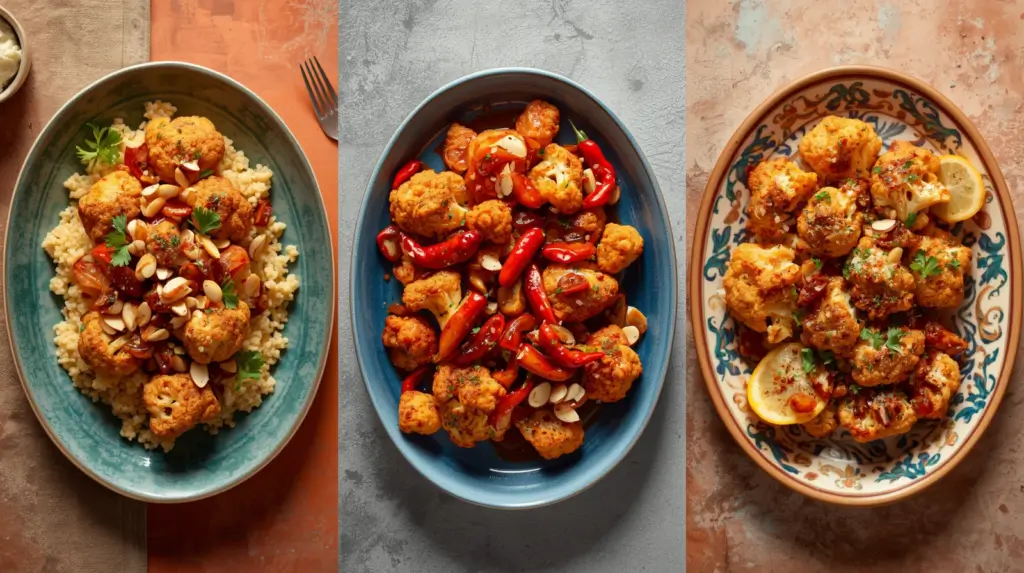
Moroccan-Spiced Version: Swap za’atar for ras el hanout and add dried apricots and slivered almonds in the last 5 minutes of roasting. Serve over couscous with a yogurt-harissa sauce.
Extra-Spicy Za’atar Version: Double the cayenne pepper and add 1 teaspoon of harissa paste to the spice mix before roasting. Finish with a drizzle of chili oil mixed with extra za’atar for serious heat lovers. The smokiness of the paprika pairs beautifully with the harissa’s fermented pepper flavors.
Za’atar with Honey Glaze: After roasting, brush the cauliflower with a mixture of 2 tablespoons honey, 1 tablespoon lemon juice, and 1 teaspoon za’atar. Return to the oven for 3-4 minutes until the glaze caramelizes. This sweet-savory version creates an incredible contrast between the crispy, spiced exterior and the sticky-sweet glaze.
Plating Like a Pro and Perfect Partners
Making It Look As Good As It Tastes
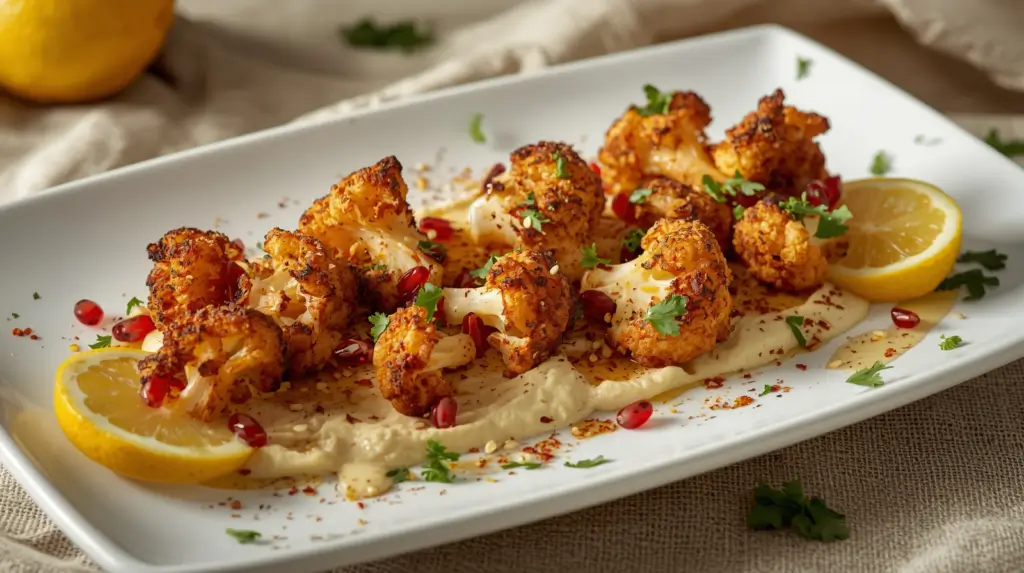
The visual appeal of this dish comes from contrast. Spread that creamy, beige hummus across a white or deep blue platter—something that makes the golden cauliflower pop. Don’t just dump it in the center; arrange larger florets first, then fill gaps with smaller pieces. That spiced oil should glisten on top, catching the light.
Fresh herbs aren’t just garnish—they’re part of the flavor profile. Use whole leaves of parsley or cilantro rather than chopped bits for a more elegant look. If you’ve got pomegranate seeds, scatter them right before serving so they don’t bleed into the hummus.
What to Serve Alongside
Traditional Middle Eastern Spread:
- Warm pita bread or laffa
- Baba ganoush for contrast
- Israeli salad with cucumbers and tomatoes
- Pickled turnips and olives
Modern Grain Bowl Base:
- Fluffy couscous or quinoa
- Chopped kale massaged with lemon
- Roasted chickpeas for extra protein
- Tahini-date dressing
Light and Fresh Options:
- Cucumber yogurt salad with mint
- Tabbouleh with extra parsley
- Grilled halloumi cheese
- Lemon-garlic white beans
Beverage Pairings:
- Mint lemonade (limonana)
- Lebanese-style iced tea with orange blossom
- Sparkling water with pomegranate and lime
- Fresh pomegranate juice
Making Leftovers Exciting
Here’s where this recipe really shines. Unlike most roasted vegetables that turn sad and limp in the fridge, this cauliflower transforms into new dishes that don’t feel like leftovers at all.
Store cooled cauliflower in an airtight container for up to 4 days. The spices actually continue to penetrate, making the flavor even better on day two. To reheat and restore some crispness, spread on a baking sheet and pop under the broiler for 2-3 minutes, or use an air fryer at 375°F for 4-5 minutes.
Next-Day Transformations:
Loaded Grain Bowl: Chop the cauliflower and mix with warm farro or bulgur, chickpeas, diced cucumber, and a lemon-tahini dressing. Top with crumbled feta.
Cauliflower Flatbread: Spread hummus on naan or flatbread, add chopped cauliflower, fresh arugula, and a drizzle of tahini. Fold and eat like a wrap.
Middle Eastern Breakfast Hash: Dice the cauliflower and pan-fry with onions and bell peppers. Make wells and crack eggs into them. Cover and cook until eggs are set. Serve with pita and hot sauce.
Za’atar Cauliflower Soup: Blend leftovers with vegetable stock, garlic, and a touch of cream. The roasted flavor makes an incredibly deep, complex soup.
Your Questions Answered
Is it okay to use frozen cauliflower for this crispy roasted cauliflower recipe? You can, but the texture won’t be as crispy since frozen cauliflower releases more moisture. If you do use frozen, thaw it completely, squeeze out excess water, and extend roasting time by 10 minutes. Fresh cauliflower will always give you better results for that golden, crispy finish.
What if I can’t find za’atar? Make your own by mixing 2 tablespoons dried thyme, 1 tablespoon sumac, 1 tablespoon toasted sesame seeds, and 1/2 teaspoon salt. It won’t be exactly the same as a traditional blend, but it’ll still be delicious.
How spicy is this dish? It’s more aromatic than spicy. Za’atar isn’t hot at all—it’s herbal and slightly tangy. The optional cayenne adds mild heat, and the red pepper flakes in the oil give a tiny kick, but you control both.
Can I roast a whole head instead of florets? Absolutely! Keep it intact with the core, increase olive oil to 1/4 cup, rub the spice mix all over, and roast for 50-60 minutes, rotating once. It makes a dramatic presentation when you bring it to the table whole.
What’s the easiest way to cut cauliflower into florets? Remove the outer leaves, turn it upside down, and cut out the core at an angle. The head will naturally separate into sections. Cut those into similar-sized pieces so they roast evenly.
Why isn’t my cauliflower getting crispy? Three likely culprits: it’s still wet, your pan is overcrowded, or your oven temperature is too low. Make sure pieces are bone-dry, spaced apart, and your oven is fully preheated to 425°F.
Can I make this oil-free? You can use vegetable broth for roasting, but you’ll lose the crispy texture that makes this crispy roasted cauliflower recipe special. The oil is what allows proper caramelization and carries the fat-soluble flavors in the spices. Without it, you’ll end up with steamed cauliflower rather than roasted.
How do I store the spiced oil? Keep it in a sealed jar in the fridge for up to one week. It’ll solidify, so let it come to room temperature or warm it gently before using. It’s fantastic on other roasted vegetables, rice, or even scrambled eggs.
Ready to create roasted cauliflower zaatar that’ll have everyone asking for the recipe? Preheat that oven and let’s turn a humble vegetable into something genuinely crave-worthy.
Be the first one to share what you think about this crispy roasted cauliflower with za’atar!
Leave a Review
There are no reviews yet. Be the first one to write one.